Showing posts with label robocalls. Show all posts

Wednesday, 1 August 2012

Integrity of Elections in Canada and the United States

The Canadian Situation on Voter Fraud
Election fraud has become a major issue in Canada. There have been allegations of the Conservative government affecting vote results by using robocalls (automated calls) to send voters to a different polling station. The issue is presently under investigation by Elections Canada.
"OTTAWA — The IP address used to send misleading robocalls to Guelph voters on election day was the same address used by a worker from the campaign office of local Conservative candidate Marty Burke, Elections Canada investigators believe.
The Internet Protocol address — like an Internet phone number — was used by campaign worker Andrew Prescott to arrange legitimate calls through RackNine, the Edmonton voice broadcasting firm.  Full Story@allvoices.com

Monday, 14 May 2012

Canadian Politics this Week (7-13 May 2012)

You have to love Canadian politics if you're a political junky.  Since the Harper Conservatives won a majority just over a year ago, the attacks by the opposition parties have been relentless.  This week a poll revealed for the first time that the NDP has a slight lead over the Conservatives, 34% to 30%, while the Liberal party's popularity remained steady  at 20%.

The Robocalls, omnibus crime bill and the current bill before government, the budget bill, F35 spending estimates, which have turned out higher than the governments estimates and the latest report on the cost of the Libyan conflict, have all contributed to the decline of popularity for the Conservatives. 

Mulcair's Take on Manufacturing and the Resource Industry

Leader of the Official Opposition, Thomas Mulcair, has slammed the resource industry for being responsible of the decline of the manufacturing sector in Quebec and Ontario.  This has prompted a strong response from the Premiers of Saskatchewan, Alberta and British Columbia. 

Although Mulcair said in March that he would never be heard speaking against oilsands development,  he has jumped fully into condemning Harper's resource based policies on the economy as the "Dutch disease," referencing the Netherlands find of natural gas, which caused a decline in that countries economy.

Brad Wall, Alison Redford and Christy Clark have condemned Mulcair's remarks.  Brad Wall's response was the strongest, questioning Mulcair's comments by asking if Mulcair thinks the oilsands are a disease, he would like to know what the NDP leader's cure is.

 "It's a concern for people out West.  I think his economics are wrong. And there's a lack of recognition there that the resource strength for Western Canada is a strength for the whole country,"  Wall said.

British Columbia's Premier Christy Clark called Mulcair's remarks goofy.

 "I really thought that type of thinking was discredited and it had been discredited for a long time. It's so backwards," Clark said. "I think that's just goofy." She continued, "The NDP talk their gobbledygook, but really they want less economic development," she said. "We all know it's a recipe for disaster."


Alison Redford also reacted stating that she is not sure if Mulcair's comments were well informed or just his opinion. She continued that she hopes he explains his motivation because she says someone looking to lead the country one day needs to understand just how important the oilsands are to the entire country.


Gun Registry and Budget Bill


A very public fight has broken out between the Justice Minister and the Governments of Ontario and Quebec over  the legality of collecting information on long guns.  The federal gouvernment scrapped the gun registry earlier this year but the Chief Firearms Officer vowed to continue with the collection of information of gun purchases.  While he was told to cease and desist, the response was in defiance, stating that his authority stems from the Firearms act and he encouraged the federal government to either change he act or take it to the Supreme Court.  More to follow on that.

The Opposition has used parliamentary procedures to delay the budget bill.  About one third of the 400 page bill contains changes to the environmental protection act, including streamlining of procedures for environmental assessments.  The bill would limit hearings to two years, which also includes the Northern Gateway Pipeline.  It would stop exemptions for charities that use their funds for advocating.

Lybian Conflict

The government has also come under fire for the cost of the Libyan mission.  Last year, Defence Minister, Peter MacKay, reported the costs to be just under $50 million.  Not unlike the F35 procurement costs, it seems the governments report was flawed.  The cost is apparently closer to $100 Million, almost double the reported cost.

The Minister defended his reports stating that those were the figures he had received from the Department of National Defence.

 "What I said was that, as of Oct. 13, the figures that I received from the department were under $50 million,"

Prime Minister Harper  noted the total figure of $347 million includes the ongoing costs of operating the Canadian military, and he defended the earlier estimates.

"We always give the most up-to-date figures and it's important also to know ... that these figures include normal operations of the Canadian military, of those assets over that period," Harper said.

Expect to hear more on Mulcair's rhetoric this week.   Unfortunately, although Mulcair slams the Western resource based economy, he has not presented his won vision on how he would pay for all the social programs he seems to want.  It would be prudent for him to present an alternate economic plan.

Canada's economy is doing much better than most G8 countries.  The last jobs report has shown positive growth in the manufacturing sector, including Ontario and Quebec.  Mulcair has to present a vision and convince Canadians that his plans would not kill the fragile economy.

One only needs to look at Greece, Italy and Spain to realize what excessive spending and living beyond the means can do.  Unfortunately the situation in  Europe can drag down the global economy. 

Most of the changes being made by the Conservative government were well advertised on its agenda.   Only the changes to Old Age Security came out of the blue.  Those changes, i.e. raising the eligibility age from 65-67 do not affect anyone 55 or older. 

Look forward to another lively week in Parliament and more doom and gloom regarding the environment from the opposition. 

By the way there is an open invitation for Thomas Mulcair to visit the Oilsands. 


Sunday, 6 May 2012

Canadian Politics this Week (30 April to May 6th)

One can never say that Canadian politics are boring.  This week covered articles about the Conservative's first year as a majority government, polls that indicate that the NDP is in a statistical tie with the Conservatives, while the Liberal Party keeps slipping.  There was the trash talk about Conrad Black's return to Canada, more talk on the F35 procurement process and environmental issues were in the forefront with the "Freedom train", which is taking first nations people across the country in solidarity against the Northern Gateway pipeline. 

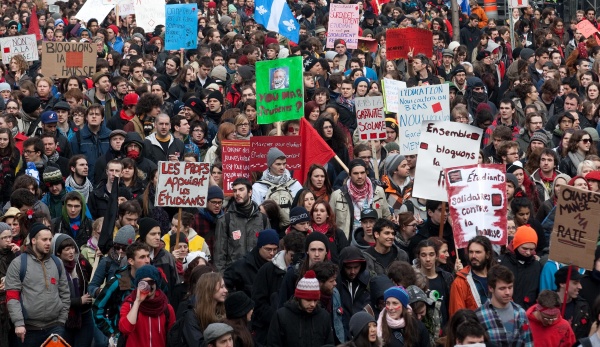
In Quebec students continue to protest the raising of tuition fees, although Quebec has the lowest in Canada.  Violence has marked the protests and certainly has not won them the sympathy of citizens. 

TransCanada Corp has announced that it has resubmitted its application for approval of the XL Keystone pipeline, which was rejected by the Obama Administration earlier this year.  The Administration cited environmental concerns, while proponents called it a political decision during an election year. 

In Alberta the Highway 63 issue was front end centre, culminating on Saturday in a rally in Fort McMurray to urge the Alberta government to make the highway, which is touted as the deadliest highway in Alberta, a priority.  Premier Alison Redford has responded by stating that she would have the Transportation Minister make it a top priority, once her cabinet is appointed.  She did not respond to an invitation to join the rally in Fort McMurray. 

Friday afternoon Elections Canada investigators said that they believe that the IP address used to send misleading robocalls to Guelph voters on election day was the same address used by a worker from the campaign office of local Conservative candidate Marty Burke, Elections Canada investigators believe.

The address was apparently used by campaign worker Andrew Prescott to arrange legitimate calls through RackNine, the Edmonton voice broadcasting firm.

But the same IP address was also used to arrange the fraudulent “Pierre Poutine” calls that pretended to be from Elections Canada and sent hundreds of electors to the wrong polling stations, Elections Canada alleges in court documents.

RackNine records provided to Elections Canada showed that Prescott’s account had been accessed from a Rogers IP address in Guelph, 99.225.28.34.

The IP addresses used by Pierre Poutine to set up the calls were hidden by a proxy server that masks the originating IP. On one occasion, however, Poutine — or Pierre Jones, as he was known to RackNine — made contact from same address used to access Prescott’s account with the company.  National Post


Needless to say this produced a number of tweets on Friday by those that oppose the Harper government, which includes environmentalists and the far left, calling for Harper's dismissal, including some name calling.  


Since the investigation is in the hands of Elections Canada and it appears that the Conservative party is co-operating, we should all take a deep breath and wait for the results of the investigation.  The Conservative Party establishment should also do more to inform the public.  Too much secrecy just opens the door to ridicule.


There can be no doubt that the implementation of Stephen Harper's agenda, including the opting out of Kyoto, steamlining of environmental reviews, delegating approval authority to provinces, budget cuts, which the  unions say reduces services to Canadians, and the fait accompli of health care spending have raised eyebrows with the opposition.  None of this should have been a surprise though.  The Harper government has been quite clear what legislation it wanted to pass. 

The reform of Old Age Security by changing to eligibility from age 65 to 67 was a surprise and one could criticize the first official mention of it.  Prime Minister Harper mentioned it for the first time earlier this year at an economic forum in Davos, Switzerland.   The reform affects those that are 54 or younger this year.  It does not affect current recipients or those close to retirement.

Canada has a couple of plans that permit people to save for their pensions.  Those included the Registered Retirement Savings Plan (RRSP), a tax deferment plan and the Tax Free Savings Account (TSFA).  20% of ones earning can be deposited into RRSP, while Canadians can save $5000 annually in their TSFA.    Of course, for Canadians just getting by it will be difficult to deposit into either of those accounts. 

Next week, the Robocall issue should be front and centre again, making for interesting exchanges in the House of Commons during Question Period.  The F35 issue will continue to haunt the government and there is sure to be more pushback by environmentalists.  Peter Kent and John Oliver will have to be on their toes.  

With the success of the New Democrats,  the Liberal Party appears to be looking for a new identitiy, moving it closer to the centre.   IMHO what the Liberal party really needs is new ideas, a generational change in leadership and an outline plan of how it would move ahead as a governing party. 

While it is the oppositions job to pose, Canadians at some point will also want to see a plan, which is funded, on how they would move the country ahead. 

There are certainly turbulent times ahead in Canadian politics.