Canadian Soccer women made history today, when they won a bronze medal by defeating France with a last minute goal.
After
an emotional semi-final match agains the US on Monday, there were some
questions if the Canadian team would be able to move beyond that game
and be a challenger to France. During last year's Worl Cup the French
side send Canada packing during the group stage by handing them a 4-0 defeat.
A
relatively eventless first half, saw many failed passes and a cautious
approach by both teams. The game certainly did not have the atmosphere
of the semi-final match against the American neighbour. Neither team had
many moves toward the goal and the half ended scoreless. Canada had an
excellent chance in the 15th minute on a pass from Rhian Wilkinson to Christine Sinclair, which went over the net. Full story @allvoices
Showing posts with label Canada. Show all posts
Thursday, 9 August 2012
Saturday, 28 July 2012
Sinclair's Double Keeps Team Canada's Hopes Alive
Canada defeats South Africa 3-0 After suffering a defeat in their Olympic opener against Japan, Canada's Tancredi and Sinclair revived the team's hopes for qualification beyond the group stage.
The win gives the Canadians three points one point below the group leaders Japan and second place Sweden. Canada is scheduled to meet Sweden next Tuesday.
Tancredi opened the scoring for Canada in the 7th minute when she converted a low centre pass from Diana Matheson for a 1-0 lead. It was Tancredi's second goal in the tournament. Tancredi was a constant threat during the game. Full Story@allvoices.com
Sunday, 6 May 2012
Canadian Politics this Week (30 April to May 6th)
One can never say that Canadian politics are boring. This week covered articles about the Conservative's first year as a majority government, polls that indicate that the NDP is in a statistical tie with the Conservatives, while the Liberal Party keeps slipping. There was the trash talk about Conrad Black's return to Canada, more talk on the F35 procurement process and environmental issues were in the forefront with the "Freedom train", which is taking first nations people across the country in solidarity against the Northern Gateway pipeline.
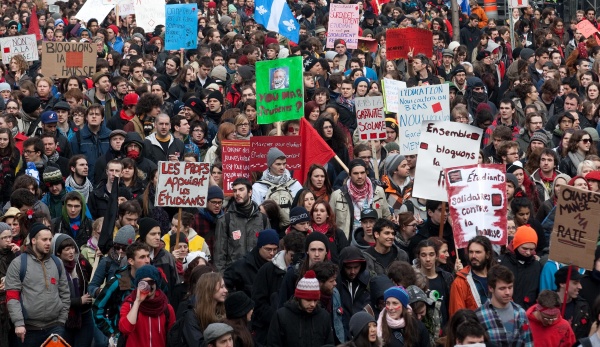
In Quebec students continue to protest the raising of tuition fees, although Quebec has the lowest in Canada. Violence has marked the protests and certainly has not won them the sympathy of citizens.
TransCanada Corp has announced that it has resubmitted its application for approval of the XL Keystone pipeline, which was rejected by the Obama Administration earlier this year. The Administration cited environmental concerns, while proponents called it a political decision during an election year.
In Alberta the Highway 63 issue was front end centre, culminating on Saturday in a rally in Fort McMurray to urge the Alberta government to make the highway, which is touted as the deadliest highway in Alberta, a priority. Premier Alison Redford has responded by stating that she would have the Transportation Minister make it a top priority, once her cabinet is appointed. She did not respond to an invitation to join the rally in Fort McMurray.
Friday afternoon Elections Canada investigators said that they believe that the IP address used to send misleading robocalls to Guelph voters on election day was the same address used by a worker from the campaign office of local Conservative candidate Marty Burke, Elections Canada investigators believe.
The address was apparently used by campaign worker Andrew Prescott to arrange legitimate calls through RackNine, the Edmonton voice broadcasting firm.
But the same IP address was also used to arrange the fraudulent “Pierre Poutine” calls that pretended to be from Elections Canada and sent hundreds of electors to the wrong polling stations, Elections Canada alleges in court documents.
RackNine records provided to Elections Canada showed that Prescott’s account had been accessed from a Rogers IP address in Guelph, 99.225.28.34.
The IP addresses used by Pierre Poutine to set up the calls were hidden by a proxy server that masks the originating IP. On one occasion, however, Poutine — or Pierre Jones, as he was known to RackNine — made contact from same address used to access Prescott’s account with the company. National Post
Needless to say this produced a number of tweets on Friday by those that oppose the Harper government, which includes environmentalists and the far left, calling for Harper's dismissal, including some name calling.
Since the investigation is in the hands of Elections Canada and it appears that the Conservative party is co-operating, we should all take a deep breath and wait for the results of the investigation. The Conservative Party establishment should also do more to inform the public. Too much secrecy just opens the door to ridicule.
There can be no doubt that the implementation of Stephen Harper's agenda, including the opting out of Kyoto, steamlining of environmental reviews, delegating approval authority to provinces, budget cuts, which the unions say reduces services to Canadians, and the fait accompli of health care spending have raised eyebrows with the opposition. None of this should have been a surprise though. The Harper government has been quite clear what legislation it wanted to pass.
The reform of Old Age Security by changing to eligibility from age 65 to 67 was a surprise and one could criticize the first official mention of it. Prime Minister Harper mentioned it for the first time earlier this year at an economic forum in Davos, Switzerland. The reform affects those that are 54 or younger this year. It does not affect current recipients or those close to retirement.
Canada has a couple of plans that permit people to save for their pensions. Those included the Registered Retirement Savings Plan (RRSP), a tax deferment plan and the Tax Free Savings Account (TSFA). 20% of ones earning can be deposited into RRSP, while Canadians can save $5000 annually in their TSFA. Of course, for Canadians just getting by it will be difficult to deposit into either of those accounts.
Next week, the Robocall issue should be front and centre again, making for interesting exchanges in the House of Commons during Question Period. The F35 issue will continue to haunt the government and there is sure to be more pushback by environmentalists. Peter Kent and John Oliver will have to be on their toes.
With the success of the New Democrats, the Liberal Party appears to be looking for a new identitiy, moving it closer to the centre. IMHO what the Liberal party really needs is new ideas, a generational change in leadership and an outline plan of how it would move ahead as a governing party.
While it is the oppositions job to pose, Canadians at some point will also want to see a plan, which is funded, on how they would move the country ahead.
There are certainly turbulent times ahead in Canadian politics.
In Quebec students continue to protest the raising of tuition fees, although Quebec has the lowest in Canada. Violence has marked the protests and certainly has not won them the sympathy of citizens.
TransCanada Corp has announced that it has resubmitted its application for approval of the XL Keystone pipeline, which was rejected by the Obama Administration earlier this year. The Administration cited environmental concerns, while proponents called it a political decision during an election year.
In Alberta the Highway 63 issue was front end centre, culminating on Saturday in a rally in Fort McMurray to urge the Alberta government to make the highway, which is touted as the deadliest highway in Alberta, a priority. Premier Alison Redford has responded by stating that she would have the Transportation Minister make it a top priority, once her cabinet is appointed. She did not respond to an invitation to join the rally in Fort McMurray.
Friday afternoon Elections Canada investigators said that they believe that the IP address used to send misleading robocalls to Guelph voters on election day was the same address used by a worker from the campaign office of local Conservative candidate Marty Burke, Elections Canada investigators believe.
The address was apparently used by campaign worker Andrew Prescott to arrange legitimate calls through RackNine, the Edmonton voice broadcasting firm.
But the same IP address was also used to arrange the fraudulent “Pierre Poutine” calls that pretended to be from Elections Canada and sent hundreds of electors to the wrong polling stations, Elections Canada alleges in court documents.
RackNine records provided to Elections Canada showed that Prescott’s account had been accessed from a Rogers IP address in Guelph, 99.225.28.34.
The IP addresses used by Pierre Poutine to set up the calls were hidden by a proxy server that masks the originating IP. On one occasion, however, Poutine — or Pierre Jones, as he was known to RackNine — made contact from same address used to access Prescott’s account with the company. National Post
Needless to say this produced a number of tweets on Friday by those that oppose the Harper government, which includes environmentalists and the far left, calling for Harper's dismissal, including some name calling.
Since the investigation is in the hands of Elections Canada and it appears that the Conservative party is co-operating, we should all take a deep breath and wait for the results of the investigation. The Conservative Party establishment should also do more to inform the public. Too much secrecy just opens the door to ridicule.
There can be no doubt that the implementation of Stephen Harper's agenda, including the opting out of Kyoto, steamlining of environmental reviews, delegating approval authority to provinces, budget cuts, which the unions say reduces services to Canadians, and the fait accompli of health care spending have raised eyebrows with the opposition. None of this should have been a surprise though. The Harper government has been quite clear what legislation it wanted to pass.
The reform of Old Age Security by changing to eligibility from age 65 to 67 was a surprise and one could criticize the first official mention of it. Prime Minister Harper mentioned it for the first time earlier this year at an economic forum in Davos, Switzerland. The reform affects those that are 54 or younger this year. It does not affect current recipients or those close to retirement.
Canada has a couple of plans that permit people to save for their pensions. Those included the Registered Retirement Savings Plan (RRSP), a tax deferment plan and the Tax Free Savings Account (TSFA). 20% of ones earning can be deposited into RRSP, while Canadians can save $5000 annually in their TSFA. Of course, for Canadians just getting by it will be difficult to deposit into either of those accounts.
Next week, the Robocall issue should be front and centre again, making for interesting exchanges in the House of Commons during Question Period. The F35 issue will continue to haunt the government and there is sure to be more pushback by environmentalists. Peter Kent and John Oliver will have to be on their toes.
With the success of the New Democrats, the Liberal Party appears to be looking for a new identitiy, moving it closer to the centre. IMHO what the Liberal party really needs is new ideas, a generational change in leadership and an outline plan of how it would move ahead as a governing party.
While it is the oppositions job to pose, Canadians at some point will also want to see a plan, which is funded, on how they would move the country ahead.
There are certainly turbulent times ahead in Canadian politics.
Saturday, 28 April 2012
Canadian Politics This Week
This week has been full of events in Canadian politics and Parliament has taken another turn when it comes to good behaviour. Highlights this week were the election in Alberta, the student protests in Quebec and the raising of the "abortion" issue in a private members bill in the House of Commons. There was also the apparent request by the U.S. for Australia and Canada to leave a small number of troops in Afghanistan post 2014. A new poll suggests that the Conservative Party is in a statistical tie with the Official Opposition "New Democratic Party."
Alberta led the growth in the Canadian economy, which expanded 2.6% in 2011, well behind the 3.4% expansion in 2010. Alberta and Saskatchewan were well ahead of the remainder of Canada with an expansion of 5.2% and 4.8% respectively. In contrast Ontario and Quebec expanded 2.0% and 1.7%. The economies in P.E.I, N.B. and N.S. are all but at a standstill ranging from 1.1 to .01%, while Newfoundland is above the national average at 2.9%. Manitoba at 1.1% growth is the only Western Province below the national average. The Yukon and Nunavut far exceeded the national average, while the economy of the North West Territories contracted by 5.5%.
Turning to the Alberta elections, Monday nights results were a major misreading of the polling organizations. Pollsters had predicted a Wildrose sweep, yet when it was all said and done, Alison Redford's Progressive Conservative Party had an overwhelming majority, capturing 61 of 87 seats in the Alberta Legislature. The big loser is the Alberta Liberal Party, which went from 26% of the popular vote in 2008 to just 10% in Monday's election. While the Wildrose Party did not meet the expectations of the polls, it nonetheless gained 16 seats over 2008 and now forms the official opposition. Many analysts believe that the election turned into Redford's favour during the last three days of the campaign. The politics of fear worked and many Liberals joined the Redford camp, especially the unions and teachers.
Alison Redford has a job on her hands to keep her promises, improve the ailing health care system and stamp out corruption and intimidation in her party. The Wildrose Party will, no doubt, hold her and the Progressive Conservatives to account. It should make for an interesting four years in the Alberta Legislature.
In Ontario, the Liberal government is one seat short of a majority and after the Progressive Conservative leader rejected the proposed the budget outright, Premier Dalton McGuinty made concessions to the New Democrats to pass his budget, another deficit budget, which resulted in Ontario's credit rating being downgraded.
The fortunes seem to be turning in the favour of the Ontario Liberals though, since Tory MPP Elizabeth Witmer resigned on Friday, triggering a byelection. Witmer is the MPP for Kitchener-Waterloo. In last October's vote, Witmer had 21,356 votes while Liberal candidate Eric Davis finished second with 17,837 votes. That riding is now up for grabs in a byelection that must be called within six months.
Then there was the issued of student protests and violence in Montreal over tuition fees. Even with the newly proposed increases by the Charest government, Quebec students pay the lowest tuition fees anywhere in Canada. In Alberta for full time tuition the cost is double compared to Quebec students. If Quebec students ever had the sympathy of the public, it is unlikely that anyone is on their side after the violence and destruction caused by their protests. Every day they strike costs the taxpayer additional fund to pay for police forces. Go figure.
On the national scene a private members motion once again ignited the fire between pro-life and pro-choice forces. The motion called for a committee to be formed to examine when life starts. While the bill will go nowhere, it again raised doubts as to the Prime Minister's secret agenda. The Prime Minister already indicated he would vote against the motion. In likelihood most of his caucus will as well. The Liberals will allow a free vote on the issue, while the NDP has instructed its MPs to vote against the motion. One has to shake his head and wonder why this issue has to be raised yet again. These issues have been settled decades ago.
As it became know this week that there may be a request by the U.S. for Canada to leave some troops in Afghanistan past 2014, the debate was once again ignited. The NDP is absolutely against any troops remaining in Afghanistan, while the government indicated they would consider it.
"As we approach that date, we will examine all options and we will take the decision that is in the best interest of this country and in the best interest of our security objectives for the globe," PM Harper said.
When Mulcair asked the prime minister about the extension, Harper attacked the NDP for being pacifists regardless of the situation. "In 1939, the NDP leader didn’t even want to support the fight against Hitler," said Harper. Of course the PM was referring to the CCF, the predecessor of the NDP. This created a lot of chatter in the twitter sphere, with Canadians offering history lessons to the PM.
All in all it has been a busy week in Canada, with the election campaign heating up in British Columbia, the Question Period comedy hour, student violence and demonstrations in Quebec and the Alberta election.
Alberta led the growth in the Canadian economy, which expanded 2.6% in 2011, well behind the 3.4% expansion in 2010. Alberta and Saskatchewan were well ahead of the remainder of Canada with an expansion of 5.2% and 4.8% respectively. In contrast Ontario and Quebec expanded 2.0% and 1.7%. The economies in P.E.I, N.B. and N.S. are all but at a standstill ranging from 1.1 to .01%, while Newfoundland is above the national average at 2.9%. Manitoba at 1.1% growth is the only Western Province below the national average. The Yukon and Nunavut far exceeded the national average, while the economy of the North West Territories contracted by 5.5%.
Turning to the Alberta elections, Monday nights results were a major misreading of the polling organizations. Pollsters had predicted a Wildrose sweep, yet when it was all said and done, Alison Redford's Progressive Conservative Party had an overwhelming majority, capturing 61 of 87 seats in the Alberta Legislature. The big loser is the Alberta Liberal Party, which went from 26% of the popular vote in 2008 to just 10% in Monday's election. While the Wildrose Party did not meet the expectations of the polls, it nonetheless gained 16 seats over 2008 and now forms the official opposition. Many analysts believe that the election turned into Redford's favour during the last three days of the campaign. The politics of fear worked and many Liberals joined the Redford camp, especially the unions and teachers.
Alison Redford has a job on her hands to keep her promises, improve the ailing health care system and stamp out corruption and intimidation in her party. The Wildrose Party will, no doubt, hold her and the Progressive Conservatives to account. It should make for an interesting four years in the Alberta Legislature.
In Ontario, the Liberal government is one seat short of a majority and after the Progressive Conservative leader rejected the proposed the budget outright, Premier Dalton McGuinty made concessions to the New Democrats to pass his budget, another deficit budget, which resulted in Ontario's credit rating being downgraded.
The fortunes seem to be turning in the favour of the Ontario Liberals though, since Tory MPP Elizabeth Witmer resigned on Friday, triggering a byelection. Witmer is the MPP for Kitchener-Waterloo. In last October's vote, Witmer had 21,356 votes while Liberal candidate Eric Davis finished second with 17,837 votes. That riding is now up for grabs in a byelection that must be called within six months.
Then there was the issued of student protests and violence in Montreal over tuition fees. Even with the newly proposed increases by the Charest government, Quebec students pay the lowest tuition fees anywhere in Canada. In Alberta for full time tuition the cost is double compared to Quebec students. If Quebec students ever had the sympathy of the public, it is unlikely that anyone is on their side after the violence and destruction caused by their protests. Every day they strike costs the taxpayer additional fund to pay for police forces. Go figure.
On the national scene a private members motion once again ignited the fire between pro-life and pro-choice forces. The motion called for a committee to be formed to examine when life starts. While the bill will go nowhere, it again raised doubts as to the Prime Minister's secret agenda. The Prime Minister already indicated he would vote against the motion. In likelihood most of his caucus will as well. The Liberals will allow a free vote on the issue, while the NDP has instructed its MPs to vote against the motion. One has to shake his head and wonder why this issue has to be raised yet again. These issues have been settled decades ago.
As it became know this week that there may be a request by the U.S. for Canada to leave some troops in Afghanistan past 2014, the debate was once again ignited. The NDP is absolutely against any troops remaining in Afghanistan, while the government indicated they would consider it.
"As we approach that date, we will examine all options and we will take the decision that is in the best interest of this country and in the best interest of our security objectives for the globe," PM Harper said.
When Mulcair asked the prime minister about the extension, Harper attacked the NDP for being pacifists regardless of the situation. "In 1939, the NDP leader didn’t even want to support the fight against Hitler," said Harper. Of course the PM was referring to the CCF, the predecessor of the NDP. This created a lot of chatter in the twitter sphere, with Canadians offering history lessons to the PM.
All in all it has been a busy week in Canada, with the election campaign heating up in British Columbia, the Question Period comedy hour, student violence and demonstrations in Quebec and the Alberta election.
Sunday, 4 December 2011
Canada's New Democrats Leadership Hopefuls First Debate
The New Democratic Party had an unprecedented success during Canada's federal election in May of this year. The party overtook the Liberal Party as the official opposition. While most of the gains were in Quebec, it has realigned the party to attempt a run at government in the next election. Shortly after the election, the NDP's popular leader Jack Layton died and this has set off a frenzy of those vying for the leadership of the party. The first of six leadership debates will take place today broadcast on the CTV Newschannel at 2:00 pm EST. The new leader will be chosen on March 24th.
The debate for the nine candidates will be conducted over two hours, with the first hour in English and the second hour in French. All nine candidates are bilingual.
Ottawa MP Paul Dewar, Toronto MP Peggy Nash, Manitoba MP Niki Ashton, Former Party President Brian Topp, Montreal MP Thomas Mulcair and Nova Scotia MP Robert Chisholm will be on stage along with MP Romeo Saganash, B.C. MP Nathan Cullen and Nova Scotia businessman Martin Singh.
The New Democratic Party
The New Democratic Party evolved from the Co-operative Commonwealth Federation, which was a movement that emerged from Saskatchewan. The newly formed Canadian Labour Congress started negotiating with the CCF in 1956 to bring about a merger of the organized labour and the political left. In 1961 the New Democratic Party emerged, led by former Saskatchewan Premier Tommy Douglas. The present interim leader of the Party is Nycole Turmel. The party's popular leader Jack Layton passed away on August 22, 2011. The Party holds 103 of 308 seats in Parliament and is the official opposition. Canadian Political Parties
The subject of today's debate will be the economy. With Europe's debt crisis and the potential collapse of the global economy, it will be interesting how far left the NDP's approach to solving the economic woes will be. Not unlike the left wing of the Democratic Party, the NDP believes that the government is the solution to most problems. Europeans and Americans have pretty well determined that the problem has been excessive spending. So this debate should prove to be interesting. Hopefully the media does not give the potential leaders a free ride.
With little time to answer questions, about one minute per candidate, the outcome could be similar to the GOP Presidential debate and the frontrunners could change frequently between now and May. If the debate accomplishes one thing, it must attempt to appeal to Canadian West of the Quebec border. Expect most of the candidates attacking the policies of the governing Conservatives and not so much each other. Ideologically the candidates are on the same sheet. Their vision for Canada and its implementation may vary slightly.
The debate for the nine candidates will be conducted over two hours, with the first hour in English and the second hour in French. All nine candidates are bilingual.
Ottawa MP Paul Dewar, Toronto MP Peggy Nash, Manitoba MP Niki Ashton, Former Party President Brian Topp, Montreal MP Thomas Mulcair and Nova Scotia MP Robert Chisholm will be on stage along with MP Romeo Saganash, B.C. MP Nathan Cullen and Nova Scotia businessman Martin Singh.
The New Democratic Party
The New Democratic Party evolved from the Co-operative Commonwealth Federation, which was a movement that emerged from Saskatchewan. The newly formed Canadian Labour Congress started negotiating with the CCF in 1956 to bring about a merger of the organized labour and the political left. In 1961 the New Democratic Party emerged, led by former Saskatchewan Premier Tommy Douglas. The present interim leader of the Party is Nycole Turmel. The party's popular leader Jack Layton passed away on August 22, 2011. The Party holds 103 of 308 seats in Parliament and is the official opposition. Canadian Political Parties
The subject of today's debate will be the economy. With Europe's debt crisis and the potential collapse of the global economy, it will be interesting how far left the NDP's approach to solving the economic woes will be. Not unlike the left wing of the Democratic Party, the NDP believes that the government is the solution to most problems. Europeans and Americans have pretty well determined that the problem has been excessive spending. So this debate should prove to be interesting. Hopefully the media does not give the potential leaders a free ride.
With little time to answer questions, about one minute per candidate, the outcome could be similar to the GOP Presidential debate and the frontrunners could change frequently between now and May. If the debate accomplishes one thing, it must attempt to appeal to Canadian West of the Quebec border. Expect most of the candidates attacking the policies of the governing Conservatives and not so much each other. Ideologically the candidates are on the same sheet. Their vision for Canada and its implementation may vary slightly.
Friday, 2 December 2011
High Speed Internet in Canada
Canada's ranking in high speed internet penetration has been slipping constantly for the past ten years, although previously a leader in the field. The report, prepared by the Organization of Economic Cooperation and Development (OECD), ranks 34 member countries. Canada is ranked 13th of 34 member countries. Interestingly enough the U.S. ranks 15th with only 27.3% penetration.
When it comes to wireless connections, Canada fares far worse. With only 31.8% of Canadians with wireless access, the country ranks 26th.
Even when you have access in rural areas, in my case only 1 hour from Edmonton, the situation can be frustrating. Satellite access has been, until now, based on a fair access rule of 250 MB per 24 hour period. Exceeding that limit result in having your internet access, for all intends and purposes, revoked for 24 hours. Additional problems include getting a service in situation if equipment fails. This writer waited 14 days for the replacement of a modem a year ago. It is not just a straight exchange, since the satellite dish requires realignment or synchronization.
Earlier this week, when the provider has a problem with Hughes modems, the system apparently went down for four hours. When the system apparently returned, this users modem did not receive any signals. Upon query, the techs determined that the modem may have to be replaced. Oh no, not a another two weeks. It was then determined, since the user's warranty had run out, the service call and replacement equipment would be charged to the client. Really?
Fortunately there is now wireless access in this area, available at a cost of up to $70 a month for up to 10GB of data. While this is not ideal, it seems the best option for this area. It will take a month to determine how much data is used on the average.
Canada and the US should be in the forefront of internet access and not lag behind other nations. Federal and State/Provincial government should put pressure on internet providers to provide affordable high speed internet access to most people. The internet is no longer a luxury.
When it comes to wireless connections, Canada fares far worse. With only 31.8% of Canadians with wireless access, the country ranks 26th.
Even when you have access in rural areas, in my case only 1 hour from Edmonton, the situation can be frustrating. Satellite access has been, until now, based on a fair access rule of 250 MB per 24 hour period. Exceeding that limit result in having your internet access, for all intends and purposes, revoked for 24 hours. Additional problems include getting a service in situation if equipment fails. This writer waited 14 days for the replacement of a modem a year ago. It is not just a straight exchange, since the satellite dish requires realignment or synchronization.
Earlier this week, when the provider has a problem with Hughes modems, the system apparently went down for four hours. When the system apparently returned, this users modem did not receive any signals. Upon query, the techs determined that the modem may have to be replaced. Oh no, not a another two weeks. It was then determined, since the user's warranty had run out, the service call and replacement equipment would be charged to the client. Really?
Fortunately there is now wireless access in this area, available at a cost of up to $70 a month for up to 10GB of data. While this is not ideal, it seems the best option for this area. It will take a month to determine how much data is used on the average.
Canada and the US should be in the forefront of internet access and not lag behind other nations. Federal and State/Provincial government should put pressure on internet providers to provide affordable high speed internet access to most people. The internet is no longer a luxury.
Thursday, 24 November 2011
Canada's Celebrates Success in Libya - Becomes Controversial
Canada had an elaborate ceremony, on Parliament Hill to honour the Canadian military for its role in freeing the people of Libya from its brutal and psychotic leadership. On the outset that seems like the decent thing to do and there can be no argument that troops should be recognized for their contribution. The ceremony became controversial with opposition Members of Parliament, since it was seen as overkill. This was especially in view of the fact that Canada has lost 158 soldiers in Afghanistan, with several hundred wounded. The Afghanistan mission has not been officially been recognized with a ceremony, although Canada ceased its combat mission in July. There has been no formal recognition for the contributions Canadian troops made in the Balkans, particularly in Bosnia and Croatia.
The ceremony also honoured Lieutenant-General Charles Bouchard, who was the Commander of the NATO mission. General Bouchard was awarded he Meritorious Service Cross.
The Prime Minister, with Gouvernor General David Johnson, Defence Minister Peter MacKay and Chief of Defence Staff Walter Natynczyk in attendance, thanked the Canadian troops on the mission and hailed the mission a success.
“It is a day to pay tribute to the extraordinary men and women of our Armed Forces who played their part. And yes, it is a day to honour the great Canadian who led them.
While everyone recognizes the contributions made by Canadian troops in many theatres around the world, espcially in Afghanistan and and Bosnia, during the past two decades, it seems odd that there would be a "Mission Accomplished" moment for Libya.
Many would argue that Libya is far from a success. Yes Gaddafi is dead, Saif al-Islam and the former Intelligence Chief are in custody and the National Transitional Council (NTC) is attempting to establish governance in a destroyed land. Infrastructure needs to be rebuild and there are daily reports of revenge acts. The UN has pointed to human rights abuses by the Rebels on former Gadaffi loyalists. Even the death of Gaddafi is being questioned.
The troops that did the heavy lifting in Kandahar Province in Afghanistan would like to see some recognition come their way, as would the troops involved in the fighting in the Medak Pocket in the former Yugoslavia, including those held up in the Sarajevo airport, while the Serbs put Sarajevo under siege.
It seems appropriate that the same courtesy of recognition would be afforded them. When the issue was addressed on CBC's Power and Politics, Parliamentary Secretary Chris Alexander, rightly said that the Canadian Forces went through a decade of darkness when a Liberal government was in power. However, when asked about Bosnia he was dismissive and said it wasn't a combat mission. Technically he was correct, but only technically. Perhaps Mr. Alexander should read Carol Off's book "The Ghost of Medak Pocket" and then come back and tell his audience it wasn't combat.
Major General Lewis MaKenzie's account in" Peacekeeper The Road to Sarajevo" gives you an idea what it was like in Bosnia during the time of the UN mandate. We won't talk about the Chain of Command problems with the UN Operation Centre in New York, but it wasn't pretty. Yes Mr. Alexander it wasn't combat, but it sure smelled like it.
We could also talk about the Somalia Affair, where the whole Canadian Airborne Regiment was disgraced and then disbanded over a couple of bad apples. That, however, was the Liberal Governments and the media's doing.
The point of all this is that each and every Veteran deserved to b honoured. The Canadian Forces did a superb job, dropping more than 600 bombs on Libyan targets and Canada had a big part of removing Gaddafi. Lieutenant General commanded NATO and did the strategic planning for the mission and was the front man for criticism directed at NATO. He did an outstanding job and deserves to be recognized.
While the military mission has ended, let there be no doubt that a lot of work remains to be done and the mission is a long way from being accomplished. Canada needs to recognize all Veterans and not just on Red Friday as the Defence Minister suggests, but in a formal ceremony. It is high time that those that sacrificed life and limb in Afghanistan be recognized. Lest we Forget.
The ceremony also honoured Lieutenant-General Charles Bouchard, who was the Commander of the NATO mission. General Bouchard was awarded he Meritorious Service Cross.
The Prime Minister, with Gouvernor General David Johnson, Defence Minister Peter MacKay and Chief of Defence Staff Walter Natynczyk in attendance, thanked the Canadian troops on the mission and hailed the mission a success.
“It is a day to pay tribute to the extraordinary men and women of our Armed Forces who played their part. And yes, it is a day to honour the great Canadian who led them.
The prime minister said Gadhafi's harsh and violent response to the uprising was "an invitation to genocide" and that is why Canada joined its NATO allies to support the United Nations-backed response.
He said Canada will always defend what is right. "For we believe that in a world where people look for hope and cry out for freedom, those who talk the talk of human rights must from time to time be prepared to likewise walk the walk," said Harper.
A 21-gun salute and a flypast over Parliament Hill kicked off the morning's event before it began in the Senate chamber.
The flypast involved seven CF-18 fighter jets, a Sea King helicopter, an Airbus and a Globemaster aircraft, and was meant to pay tribute to the aviation support provided by the Canadian Forces in the Libyan mission. CBC
While everyone recognizes the contributions made by Canadian troops in many theatres around the world, espcially in Afghanistan and and Bosnia, during the past two decades, it seems odd that there would be a "Mission Accomplished" moment for Libya.
Many would argue that Libya is far from a success. Yes Gaddafi is dead, Saif al-Islam and the former Intelligence Chief are in custody and the National Transitional Council (NTC) is attempting to establish governance in a destroyed land. Infrastructure needs to be rebuild and there are daily reports of revenge acts. The UN has pointed to human rights abuses by the Rebels on former Gadaffi loyalists. Even the death of Gaddafi is being questioned.
The troops that did the heavy lifting in Kandahar Province in Afghanistan would like to see some recognition come their way, as would the troops involved in the fighting in the Medak Pocket in the former Yugoslavia, including those held up in the Sarajevo airport, while the Serbs put Sarajevo under siege.
It seems appropriate that the same courtesy of recognition would be afforded them. When the issue was addressed on CBC's Power and Politics, Parliamentary Secretary Chris Alexander, rightly said that the Canadian Forces went through a decade of darkness when a Liberal government was in power. However, when asked about Bosnia he was dismissive and said it wasn't a combat mission. Technically he was correct, but only technically. Perhaps Mr. Alexander should read Carol Off's book "The Ghost of Medak Pocket" and then come back and tell his audience it wasn't combat.
Major General Lewis MaKenzie's account in" Peacekeeper The Road to Sarajevo" gives you an idea what it was like in Bosnia during the time of the UN mandate. We won't talk about the Chain of Command problems with the UN Operation Centre in New York, but it wasn't pretty. Yes Mr. Alexander it wasn't combat, but it sure smelled like it.
We could also talk about the Somalia Affair, where the whole Canadian Airborne Regiment was disgraced and then disbanded over a couple of bad apples. That, however, was the Liberal Governments and the media's doing.
The point of all this is that each and every Veteran deserved to b honoured. The Canadian Forces did a superb job, dropping more than 600 bombs on Libyan targets and Canada had a big part of removing Gaddafi. Lieutenant General commanded NATO and did the strategic planning for the mission and was the front man for criticism directed at NATO. He did an outstanding job and deserves to be recognized.
While the military mission has ended, let there be no doubt that a lot of work remains to be done and the mission is a long way from being accomplished. Canada needs to recognize all Veterans and not just on Red Friday as the Defence Minister suggests, but in a formal ceremony. It is high time that those that sacrificed life and limb in Afghanistan be recognized. Lest we Forget.
Subscribe to:
Posts (Atom)